


Reporter: Tia Dwitiani Komalasari
Katadata.co.id, March 2, 2026
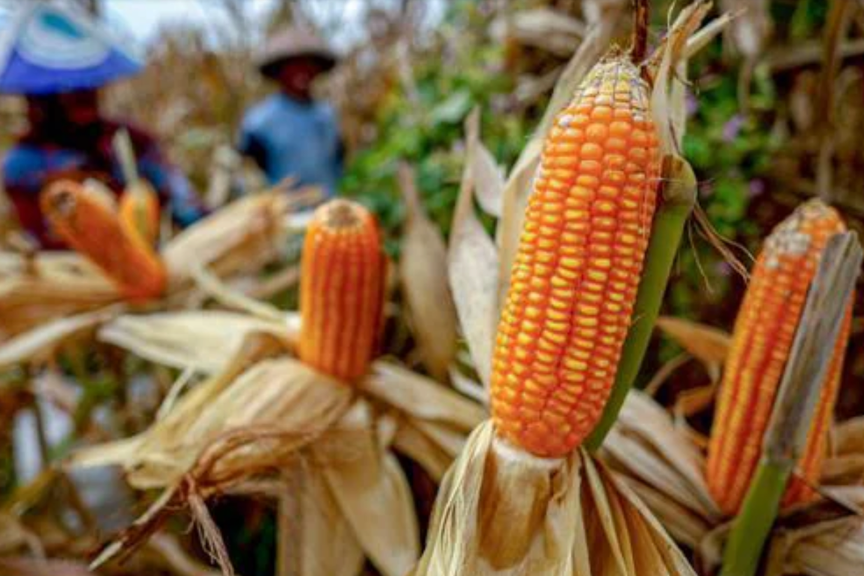
President Prabowo Subianto has repeatedly stated that Indonesia has achieved food self-sufficiency. Rice production is said to be abundant, and the government has even begun opening up export opportunities to foreign markets. However, in the Agreement on Reciprocal Trade (ART) signed with US President Donald Trump on Thursday (February 19), Indonesia has instead committed to importing various agricultural commodities from the US, including soybeans, rice, wheat, corn, beef, and even grand parent stock (GPS).
This is where the question arises: does the food import commitment in the trade agreement erode the food self-sufficiency and sovereignty that has been touted so far?
99 Percent Access and Import Commitment
The ART Agreement was signed amidst pressure from the United States for reciprocal tariffs. In 2025, Washington unilaterally imposed a 32 percent tariff on countries deemed to be causing trade deficits, including Indonesia. Through negotiations, the tariff was reduced to 19 percent. Furthermore, several leading Indonesian products, such as palm oil, coffee, cocoa, and textiles, received tariff exemptions.
In return, Indonesia opened market access to more than 99 percent of US products at zero tariffs. Annex IV: Purchase Commitments contains commitments to purchase agricultural products in certain volumes per year:
The trade agreement projected total imports of US products to reach US$33 billion, a 150 percent jump compared to total imports from the US in 2025, according to data from the Central Statistics Agency (BPS).
Furthermore, Indonesia's commitment to import 1.000 tons of rice from the United States has also sparked controversy. Quantitatively, the 1.000 tons figure appears small compared to the claimed national production of 34,69 million tons by 2025. However, this commitment has sparked controversy. Indonesia, while claiming a rice surplus, is actually locking in rice imports from countries that are not major global rice producers.
Local Foods Are at Risk of Being Marginalized
The Chairman of the Indonesian Farmers Union (SPI), Henry Saragih, called the agricultural import clause in the bylaws a form of pressure. According to him, Food Law No. 18 of 2012 and Farmer Protection Law No. 19 of 2013 emphasize that food must be prioritized from domestic production. "Indonesia cannot import food as long as it can still be produced domestically," he told Katadata.co.id on Friday (February 26).
Henry believes that locking import volumes in international agreements risks weakening incentives for domestic production. He cited soybeans as an example. Prior to the 1998 IMF Letter of Intent, soybean imports accounted for around 20 percent of demand. Now, 80 percent of the country relies on imports. "If imports are locked and international prices are lower, local foods such as cassava, corn, and sago will be increasingly marginalized," he said. Another clause that has attracted attention is the import of 580.000 live chickens in the form of grand parent stock (GPS) worth US$17–20 million. Samhadi, Head of the Price Monitoring Division of the Indonesian Poultry Association (Pinsar), said Indonesia is indeed 100 percent dependent on imported GPS because it does not yet have its own breeding technology.
The 2026 GPS import quota has been set at 800 birds. If 580 birds from the US are within this quota, the impact on supply and prices will be relatively neutral. However, if GPS is outside the quota, the impact could be significant. Because GPS is an upstream input, its impact will only be felt 1,5–2 years later on DOC and chicken prices at the farm level. However, the problem is not simply volume but also long-term genetic dependence. Without local seed development, farmers will continue to rely on global integrators and lack full control over their own seed sources.
Government Narrative: Golden Export Opportunity
Meanwhile, the government declared the ART a triumph of economic diplomacy. Coordinating Minister for Economic Affairs Airlangga Hartarto said the agreement, titled "Toward a New Golden Age for the US–Indonesia Alliance," opens broad access for 1.819 tariff lines for Indonesian products to the US market with 0 percent import duties. "In this ART, there are 1.819 tariff lines for Indonesian products, both agricultural and industrial, including palm oil, coffee, cocoa, spices, rubber, electronic components including semiconductors, and aircraft components, which have 0% tariffs," Airlangga said on Friday (20/2).
In the agricultural sector, tariff exemptions cover 173 tariff lines, covering 53 commodity groups and their derivatives. Minister of Agriculture Andi Amran Sulaiman stated that this achievement was the result of strategic negotiations that favored farmers. "Tariff exemptions on dozens of agricultural commodities are truly the result of negotiations that favor our farmers. Our agricultural products can enter the global market with fairer and more competitive access," he said. According to Amran, zero percent tariffs make Indonesian products more competitive in the United States market, opening up opportunities for increased exports and expanding markets for farmers and businesses. The Ministry of Agriculture will ensure improvements in quality and continuity of supply to maximize this export opportunity.
Policy Consistency Is a Major Obstacle
Professor of the Faculty of Agriculture, Bogor Agricultural University (IPB), Dwi Andreas Santosa, assessed that the import commitment from the United States does not necessarily threaten self-sufficiency. According to him, the figures agreed to in the Bylaws are relatively small compared to Indonesia's current total imports. "Our wheat imports last year were around 11,8 million tons. Soybeans were 8,6 million tons. The commitment to the US for 2,5 million tons of soybeans and 1,3 million tons of wheat is not a significant addition, more a shift in import origins from other countries to America," he said. He also considered the 1.000 tons of rice imports to be quantitatively insignificant. The previous year, imports of specialty rice alone reached hundreds of thousands of tons.
However, Andreas cautioned that the main issue isn't the volume of the agreement, but rather the consistency of domestic policy. "If the government doesn't address the disparity between imported soybean prices of Rp7.000 per kilogram and local production costs of Rp10.000–13.000, self-sufficiency will be difficult to achieve. Without price protection and clear incentives, farmers will lack competitiveness," he said. He argued that as long as the domestic production cost structure remains unaddressed, Indonesia will remain dependent on the global market, with or without ART.
Could Impact Farmer Incentives
Prakarsa economist Bintang Aulia Lutfi said import commitments in international agreements have the potential to narrow a country's policy space, especially if they are locked in for the long term and accompanied by a relaxation of control instruments. One impact of these import commitments is the consideration of incentives for farmers. "The risk isn't today or tomorrow. But when these commitments become permanent references, it will be more difficult for the government to implement restrictions or adjustments if they want to protect farmers," he said. He warned of the potential for path dependency, namely when domestic industries increasingly adapt to imported raw materials due to the certainty of supply and more stable prices.
"If large industries are comfortable with imports and the government doesn't provide serious incentives for local production, then our food structure will gradually become increasingly dependent on foreign countries. This isn't just a trade issue, but a matter of development direction," he said. The debate over the ART is ultimately not just about importing 1.000 tons of rice or millions of tons of soybeans, but about the consistency of Indonesia's food policy direction. On the one hand, the government is opening up massive export opportunities with zero percent tariffs; on the other, long-term import commitments have the potential to impact production incentives and the protection space for farmers. If strengthening domestic production doesn't go hand in hand with trade integration, self-sufficiency could cease to be a narrative, instead of a truly solid foundation for food independence.
Read at: katadata.com