

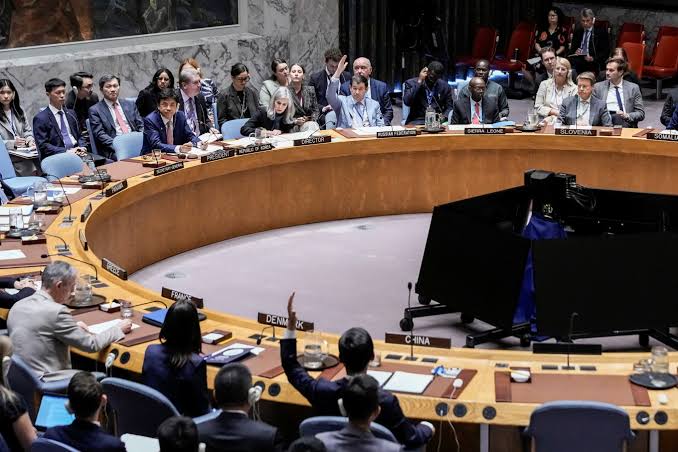
Jakarta, October 28, 2026 - The PRAKARSA contribute to the United Nations (UN) intergovernmental process regarding Beyond GDP, a global initiative to develop an approach to measuring development progress that is not only based on Gross Domestic Product (GDP), but also takes into account people's well-being, inequality, and environmental sustainability.
In August 2026, The PRAKARSA submitted written recommendations to the UN Beyond GDP Secretariat. These submissions emphasized the importance of shifting the way development success is measured, from simply economic growth to more equitable and sustainable improvements in well-being.
The PRAKARSA emphasizes that GDP growth does not always reflect improvements in people's quality of life. Economic growth can coexist with increasing inequality, limited access to public services, and deteriorating environmental conditions. Therefore, measuring development progress requires considering who benefits from growth and how those benefits are distributed.
A number of ideas were put forward by The PRAKARSA is now reflected in Elements Paper which was prepared as a basis for further discussions in the intergovernmental process Beyond GDP.
The document emphasizes that the goal of Beyond GDP is not simply to develop new statistical indicators, but rather to strengthen policy decision-making processes. One emerging direction is to integrate multidimensional development measures into national planning, budgeting, public resource allocation, and policy evaluation.
This direction is in line with the recommendations of The PRAKARSA so that Beyond GDP indicators are used to assess the impact of fiscal and development policies on welfare, inequality, job quality, and environmental sustainability.
Promoting Fairness in Development Financing
In addition to implementation at the national level, The PRAKARSA highlights the importance of using Beyond GDP in the governance of international development finance.
Per capita income remains one of the primary metrics used to determine a country's access to various development financing schemes. However, this measure does not fully reflect a country's economic vulnerability, inequality, fiscal capacity, or development needs.
In its recommendations, The PRAKARSA The Beyond GDP approach encourages equity in access to development finance, particularly for developing countries. However, its implementation must not create new requirements that limit these countries' access to funding sources.
This issue also arises in the Elements Paper, which opens up space for the use of multidimensional development measures to complement income-based approaches in international financing decision-making.
From Measurement to Policy Change
For The PRAKARSA, the success of the Beyond GDP agenda must ultimately be judged by its ability to influence policy and resource distribution, not by the number of new indicators it produces.
In the Indonesian context, this approach is relevant to encourage development evaluation that pays more attention to job quality, welfare equality, access to public services, and environmental sustainability, in addition to economic growth achievements.
The PRAKARSA also emphasized the importance of maintaining national ownership of the Beyond GDP implementation process and ensuring that developing countries receive adequate technical support and funding.
Although the Elements Paper has reflected a number of ideas that are in line with The recommendations PRAKARSA, the document is still the basis for further discussion and is not yet a final agreement of UN member states.
Going forward, The PRAKARSA will continue to monitor the development of the Beyond GDP process, particularly to encourage fiscal justice, inequality reduction, and the financing needs of developing countries to receive adequate attention within the global development framework.
Through this involvement, The PRAKARSA seeks to strengthen the contribution of Indonesian civil society in promoting fairer, more inclusive, and sustainable international development governance.