


Authors: Victoria Fanggidae and Yuanda Pangi Harahap (The Jakarta Post)
When news broke that electric vehicle manufacturers originally planning to operate in Indonesia had instead chosen Vietnam, it forced a critical question: What is going wrong in Southeast Asia’s largest economy? The situation is ironic. Indonesia holds the world’s largest nickel reserves, yet its domestic EV manufacturing industry is struggling to take root.
The fundamental causes of this failure extend far beyond simple investment metrics; they lie in the structural quality of state policy, human capital development, institutional education and state support for foundational research and technology. Together, these elements form the indispensable building blocks of a healthy, green industrial ecosystem.
This corporate relocation is not merely a loss of short-term capital. It is an early warning that without sweeping, consistent reforms in education, training and industrial strategy, Indonesia risks becoming a mere supplier of raw materials rather than a hub for EV innovation, an urgent transition that cannot be compromised in a rapidly decarbonizing global economy.
Indonesia has long broadcast its grand ambition to achieve Golden Indonesia 2045, a vision to transform the nation into a developed, highly competitive regional manufacturing hub. Yet, it is impossible to realistically discuss the 2045 milestone if critical, forward-looking industries are already fleeing the country.
Two deeply intertwined structural issues explain this divergence: industrial policy and the broader manufacturing ecosystem, which encompasses human resources, research and technology.
Regarding industrial policy, investors face frequently changing regulations, weak cross-sector coordination and fiscal incentives that are either uncompetitive or poorly executed. Jakarta’s focus remains stubbornly anchored to the raw downstreaming of mineral resource extraction rather than high-value EV assembly. This regulatory volatility makes international investors hesitant to commit long-term capital.
By comparison, the fiscal support for industrial policy in China amounts to roughly 4 percent of its GDP, deployed through highly synchronized taxes, subsidies, credit lines and land allocations. Vietnam similarly offers corporate tax holidays of up to 15 years, import duty exemptions on components, land rent reductions and deep integration into global supply chains.
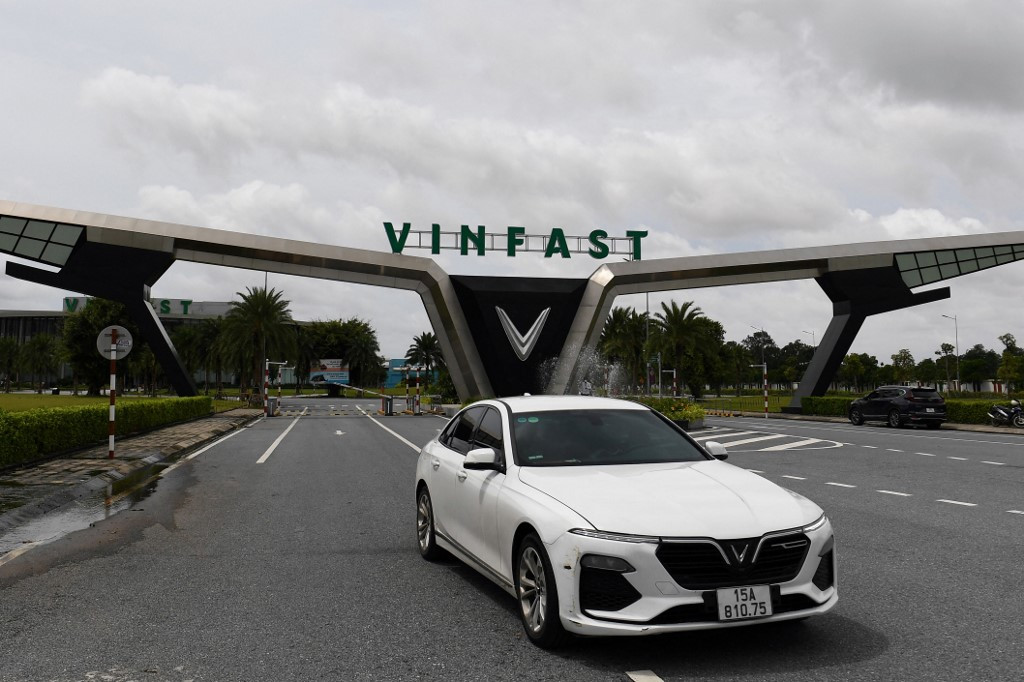
These measures are part of a predictable, holistic strategy that aligns fiscal incentives with infrastructure and workforce planning. Consequently, Vietnam has successfully attracted major commitments from domestic champions like VinFast and secured massive foreign direct investment (FDI) in high-tech manufacturing, while Indonesia’s fragmented approach has left global boards wary of sudden policy reversals.
For example, the Indonesian government shifted its export regulations for processed nickel products multiple times within a span of months, first banning raw nickel ore exports, then abruptly tightening permits for ferronickel. Similarly, poor cross-sectoral coordination was put on display by the decision to redirect the fiscal incentives budget for EVs toward a national car program. This move directly undermined Presidential Regulation No. 55/2019, which mandates a local content level (TKDN) target of 80 percent, a benchmark requiring massive, sustained investment in domestic production capacity.
By reallocating these incentives unilaterally, without synchronization or an adequate transition period, the government fractured the long-term supply chain planning of EV investors. While the downstreaming push did successfully boost nickel-derived exports from US$1 billion in 2019 to $33 billion, the lack of regulatory stability severely eroded investor confidence.
This divergence is clearly reflected in the Economic Complexity Index (ECI), which measures the sophistication of a country’s export basket. Vietnam has shown a steady climb, rising from 69th in 2012 to 45th. Conversely, Indonesia rose briefly to 59th before sliding back down to 69th, illustrating a stagnation in high-value manufacturing capabilities.
The second core failure lies in workforce readiness. Indonesia’s labor force remains structurally constrained, partly because capital-intensive megaprojects have increasingly squeezed state budgets originally meant for education, research and skills development. This fiscal pressure, combined with low foundational learning quality, has left the country lagging in high-tech competencies.
Reduced education budgets, weak alignment between academic curricula and industry needs, and a fragmented vocational training system compound the problem. Consequently, industrial firms routinely rely on foreign expertise because local vocational and university graduates lack the specialized competencies required for precision manufacturing and advanced battery technology.
Vietnam, by contrast, has deeply embedded vocational education into its overarching industrial policy. Its vocational programs serve millions of students annually, systematically certifying over a quarter of its total workforce. These programs are explicitly linked to high-tech state priorities such as semiconductors and EVs, ensuring graduates meet rigorous global supply chain standards. FROM THE WEEKENDER All of me: A journey of becoming nonbinary Read on The Weekender
Statistics Indonesia (BPS) data reveal that more than 60 percent of Indonesia’s workforce holds only a high school education or less, a stark contrast to the advanced technical skills demanded by the EV sector. In the manufacturing sector, millions of active workers are general senior high school graduates, compared with a small fraction holding diplomas or university degrees.
While Vietnam faces a similar structural challenge with a high concentration of high school-educated workers, its targeted vocational expansion has rapidly scaled up the number of technical diploma holders and university graduates, linking them directly to precision manufacturing, robotics and battery technology. This industry-integrated approach gives Vietnam a sharp competitive edge, leaving Indonesian labor concentrated primarily in low- to mid-skill roles.
Indonesia’s vast mineral wealth provides a strong economic foundation, but resources alone are no longer enough. Without coherent regulations, sustained investment in human capital and the meaningful integration of research into industrial operations, resource abundance will only result in industrial stagnation. Vietnam proves that combining predictable fiscal incentives with workforce readiness creates the institutional credibility needed to win long-term global investment.
The ambition of Golden Indonesia 2045 will remain a political slogan unless it is backed by structural reforms. The loss of EV manufacturing plants to Vietnam must serve as a final wake-up call.
If Indonesia wants to be an epicenter of green innovation rather than just a warehouse of raw nickel, it must urgently construct a coherent ecosystem where stable policies, advanced skills and domestic innovation reinforce one another.
________________________
This article was published in thejakartapost.com.